Wednesday, May 1, 2013

Loose the tummy bulge, improve your posture and support your back


The mummy tummy


Nobody likes a bulging tummy, especially if you used to see your tip toes when you look down and now you can no longer do that….We usually call that a “mummy tummy” or a “baby pouch”


What causes the mummy tummy?

 
1- Fat caused by gain weight or eating the wrong types of food
2- Stretched weak connective tissues
3- Separation of the abdominal muscles called “diastasis recti”

 
What is diastasis recti?
 
a diastasis recti is a separation of the rectus abdominis or the outermost abdominal muscles. When the muscles separate, the connective tissue that joins them stretches sideways getting weaker.When the muscles separate the support to your lower back is weakened causing low back pain and tummy bulge.Also now all your organs are supported by just weak tissues not by muscles, which will let them bulge out more.


What causes diastasis recti?
 
 
We are born with separated muscles that close at about 3 years of age, sometimes it doesn’t completely close or it reseparates:
 
  1. Too much Weight gain in the abdominal area
  2. Growing uterus during pregnancy, gets worse with every pregnancy
  3. Doing abdominal exercises incorrectly
  4. Putting to much force on these tissues and muscles


Diagnosing diastasis recti:


My son is about to get married, Is it too late to close your diastasis?
 
The good news is even if it has been 30 years since you had your separation you can still fix
 
 
Loosing the mummy tummy:
 
1-      Strengthen your inner most muscles, the transverse abdominis
2-      Strengthen your pelvic floor
3-      Then strengthen your outermost abdominal wall


The Transverse Abdominis
 
The deepest layer of the abdominal wall

Runs across the abdomen and performs abdominal compression, which draws the belly inward, and narrows the waist.


 It is also referred to as the body's "internal girdle” or “splint” responsible for closing your diastasis and flattening your stomach
 

Healing your diastasis
 
Find your transverse abdominis muscle
 
Without raising or tensing your chest or shoulders, draw your belly button back towards your spine as you slowly exhale. That’s the right muscle!
 
Don’t suck your stomach, hold your breath, move your shoulders or hips, all these tilts indicate the Transverse is not working – you have to isolate this muscle .
 
Then you have to learn to engage your transverse abdominis  Keeping your belly button to your spine all the time, not only when  you exercise, while bending, picking up your baby, or walking.


How to avoid increasing you diastasis?
 
To strengthen your core you have to learn to control the shape of your abdominal wall during exercise. To do this, you need to train your abs to pull back in toward your spine during exertion.
 
Notice the difference in the shape of the abdomen. You shouldn’t do any exercise or movement that lets your abdominal wall bulge out, it just means you’re not strong enough to do it yet, your transverse can’t stay engaged, and if you let it bulge you are actually causing more harm and getting a bigger tummy.


You should avoid all exercises that puts stress on your abdominal wall until the separation closes completely and when you go back to t=your regular exercise routine you still have to control the shape of your abdomen and not let it bulge out. Crunches, oblique’s, and Pilates 100 are a few of the exercises that should be avoided until you heal your separation.
 
In exercise quality is more important than quantity, do fewer reps with the right posture and you will notice the difference.
 
How to get up and down without hurting you diastasis:
 
Don’t get up from a back lying position directly always move to your side and push yourself up

Don’t bend forward to pick up something or carry your baby instead squat down using the muscles in your leg

If you do have to bend hold your transverses in as hard as u can


Breathing technique to strengthen your transverse muscles

1. Pull the bellybutton towards the spine as far as you can and hold for 30 seconds.  Release and repeat.
2. Engage the bellybutton a little bit 1, bring it back halfway 3, then bring it back all the way 6 . Bring back to 3, then back to 6.  Go back and forth 25 times. Over time, work up to 50-100 repetitions.
3. Pull the bellybutton to floor 5. Hold for 30 seconds, then pulse back to floor 6 as many times as possible.  

You can do these exercises anywhere  Just do them!

Belly breath

You should be filling you tummy with air, expanding it forward while you inhale, and emptying it up and contracting it inward while you exhale.
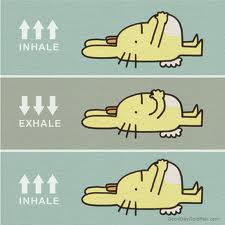

 
Splinting

Wearing a splint or a tummy support can actually help, especially in larger separations above 3 fingers, it helps hold the muscles closer together and allows faster healing.Make sure it doesnt take over the role of your muscles, you still have to be aware of your transverse and engage them in all acitivities.
 

The pelvic floor

Strong pelvic-floor muscles are an integral part of your body's internal core stabilizers.
 
pelvic floor muscles endure extreme stretching, (and sometimes tearing) in just a matter of hours during birth. And they do not automatically heal after childbirth, you need to strengthen them through Kegel exercises.
 
How to do Kegel exercises?

Kegel exercises strengthen the pelvic floor muscles, which support the uterus, bladder, small intestine and rectum. 

  •     Find your pelvic floor muscles by stopping the flow of urine. If you succeed, you've got the right muscles.now try to isolate that muscle with an empty bladder.
  • Once you've identified your pelvic floor muscles, lie on your back. Imagine an elevator rising up higher and higher as you intensify your effort.Rather than squeezing and lifting all at once, divide your contraction into two parts. Squeeze and lift just a little bit and STOP (as if your elevator is going up and stopping on the first floor), then squeeze and lift all the way and STOP (as if your elevator has made it up to the second floor). Then relax the pelvic floor just a little bit and STOP (as if your elevator is going back down to the first floor), then relax the pelvic floor all the way and finish (as if your elevator has made it back to ground level). 
  •    focus on tightening only your pelvic floor muscles. Be careful not to flex the muscles in your abdomen, thighs or buttocks. Avoid holding your breath. Instead, breathe freely during the exercises.
  •     Aim for at least three sets of 10 repetitions a day.


Julie Tupler, RN the author of Lose Your Mummy Tummy,  highly recommend for anyone struggling with a weakened core or “mummy tummy” caused by diastasis, the only scientifically proven way to close the diastasis, I recommend starting with the Tupler technique until completely closing the gap.
 
The 4-Step Tupler Technique® includes:
 
Tupler Technique® Exercises (Elevator, Contracting & Headlifts)
Splinting with the Diastasis Rehab Splint®
Using your abdominals correctly with activities of daily living
Getting up and down correctly.


A few youtube videos showing excercises that help strengthen you TVA:


Monday, April 1, 2013

"Before you jump to try out every diet out there, remember science proved you ll gain it back plus more in a two year period"


  • How many of you have tried multiple diets in hope of losing weight?
  • How many of you lost their willpower and went off a diet?
  • How many of you gained more weight than they lost after they stopped a diet within a 1 year period?
  • How many of you encountered strong food craving for sweets and carbs for the first time in their life after a prolonged diet?
  • How many of you blame themselves and their willpower for not being able to stick to their diet?
  • How many of you think they have to lose more weight even though they fall in the normal weight range?
  • How many of you think they will be happier if they just lost a couple more pounds?
  • How many of you are never satisfied with their body? 


The story of Sara


This is a story of a girl named “ sara”, she was always a thin girl, never overweight in her life, had a healthy relationship with food, which means she ate when hungry and stopped when full, she would crave sweets sometimes but she will feel satisfied with just a piece of a dessert, when she goes for McDonalds she might not be able to finish her meal, meaning she had good signaling from her brain on when to stop and when to eat.

She was always obsessed with her weight, everybody around her was always talking about diets and comparing bodies, and thin perfect girls all over the media had an impact on her perception of a good body image, she exercised since she was 13 and she started dieting as young as 16, she would diet if she gained 1 or 2 kg, and she would feel so proud of her willpower to stick to the diet and to her ability to lose the weight. By the time is she was 20 she had already gone through at least 5 to 6 diets. She was basically a skinny chronic dieter who was obsessed with her weight and calorie counting and was never satisfied.

She got her first baby, coping with the stress of a new baby and unfortunately postpartum depression, she turned to food for satisfaction, It was the only thing then gave her a feeling of calmness when life was too crazy. She  became preoccupied with food, I was always thinking what her next meal will be and how she can avoid eating it or for better just try to skip the meal.

She gained 3 kg, she panicked and decided to go on Atkins diet, for whom of you who are not familiar this is a high protein no carb no sugar diet, so no breads rice fruits sweets. So for a whole month Sara had no carbs what so ever. And she lost the weight, every girls dream right??

In celebrating the end of the diet Sara allowed herself some bread, amazingly she couldn’t stop, she kept eating and eating and eating, she was full in the stomach but her brain doesn’t want her to stop. Sara’s relationship with food changed forever.

  •        She no longer eats because she is hungry she eats because of very strong cravings for that food
  •        She can’t stop herself when full
  •        Carbs are evil she tries to avoid them at every cost, and if she let herself take a piece of bread she feels guilt, and she  usually tries to make up for it by eating less the next day.
  •        she had very strong cravings for sweets for the first time, that she won’t even be satisfied with a piece of cake , she would have to stop herself from eating the whole tray
  •        Her eating cycle is made of overeating  days followed by severe dieting to make up for it
  •        Her weight is going up and down.


Years of chronic dieting, low carb, low calorie, and low fat all messed up her brain chemistry and her metabolism.Sara is now about 6 kg over her ideal weight after being just 3 kg above.

What happened to Sara?


  •          Restrictive Diets don’t work, Specially vigorous diets that include rapid weight loss.


"Several studies indicate that dieting is actually a consistent predictor of future weight gain," said Janet Tomiyama,

Another study, 19,000 healthy older men over a four-year period, found that "one of the best predictors of weight gain over the four years was having lost weight on a diet at some point during the years before the study started," Tomiyama said.

One study found that both men and women who participated in formal weight-loss programs gained significantly more weight over a two-year period than those who had not participated in a weight-loss program

One study of dieting obese patients followed them for varying lengths of time. fewer than two years, 23 percent gained back more weight than they had lost, longer than two years, 83 percent gained back more weight than they had lost, Mann said. 


  •       Slower metabolism, and loss of muscle

 when you diet you don’t get enough calories or proteins to build and maintain muscle tissue, instead of using carbohydrates to make glucose your body’s fuel, your dieting body will burn its own muscle for energy, since muscles burn energy and keep your metabolism high, loss of muscle causes calories to be stored as fat rather than burned as energy.


The body learns to function on fewer calories, resetting your metabolism. The problem is if you then stop dieting and start eating more again, those extra calories are stored as fat. 

This effect kicks in after around eight weeks of dieting — and can last for years. Studies by Columbia University show this metabolic slowdown can mean that just to maintain a stable weight, people must eat around 400 fewer calories a day post-diet than before dieting


  •     Depression and fatigue


serotonin the most important mood stabilizer is made from an aminoacid tryptophan found in high protein food, one of the first nutrients u get low in when you start to diet, people always think if they just loose a few more pounds and be thinner they will be happier, but as you become low in tryptophan you will never seem satisfied with your weight, you ll become obsessed with calorie counting and how to eat less and loose more, and the more you get depleted of this aminoacid the less satisfied you will be, And this is a perfect onset eating disorders.

University of Maryland Medical Center. If you already have a form of depression, a poor

diet might make your symptoms worse. If you do not have a personal history of 

depression, a restrictive diet might cause depressive symptoms


  •         Food cravings and bigger appetite

Research shows dieting raises levels of hormones that stimulate appetite and lowers levels of hormones that suppress it.Furthermore, levels of leptin, a hormone that suppresses hunger and raises the metabolic rate, also remained lower than expected.

Body fights off starvation by escalating your food cravings until it overwhelms the diet., this might not stop after you finish the diet, u never know which diet will trigger these food cravings.

    Diets causes imbalances in your brain chemistry they leave you deprived and malnourished so you will crave foods more to try to fix it. Research shows trying to lose weight alters your brain and hormones so you're doomed to pile it on again.

According to a new study in the New England Journal of Medicine, hunger-related hormones disrupted by dieting and weight loss can remain at altered levels for at least a year, fueling a heartier-than-normal appetite and thwarting the best intentions of dieters.

 Skipping meals can cause blood sugar imbalances, which can lead to depressive moods, and for craving carbs and sweets.

Restrictive dieting is one of the main reasons for developing eating disorders like bulimia, anorexia  and binge eating.


  •         The yoyo effect of dieting

       Refers to constant fluctuations in weight through unhealthy weight loss methods
yo-yo dieters repeatedly move up and down in their weight gain and loss.
The yo-yo dieter often tries to lose weight too quickly. He or she may skip meals, reduce calories too much, or follow fad diets.

Fad diets are those that drastically restrict calories and/or stress extreme eating. Although initial weight loss may easily result from these efforts the after effects on the body may actually limit further weight loss because the body's metabolism tends to slow down.

The analysis concluded that most volunteers would have been better off not dieting. Their weight would be pretty much the same and their bodies would not have wear and tear from yo-yoing.

 Evidence suggests that repeatedly losing and gaining weight is linked to cardiovascular disease, stroke, diabetes and altered immune function.


If dieting doesn’t work what does?

 1.   Reestablish the way you look and feel about your body and weight : You can lose all the weight, But if you don't feel beautiful on the inside, nothing you do to the outside is going to make you happy. You are never going to be satisfied with your appearance until you can learn how to accept who you are, as well as your limitations. When it comes to body image, don't go by the celebrities and others that you see on television and in magazines. Sure they are beautiful, but so are you. You just may not be able to see it.. Most people go on a "diet" because they think they are overweight. where people are made to believe they will be more healthy if they just lose a few pounds. The truth is, 95% of people who lose weight on a diet will sooner or later gain it back. 

 
People are not created to look the same or weight the same, we don’t have all to be a carbon copy of one perfect body image that we created and promoted, if you try to satisfy the public you will never be satisfied, you have to be yourself and appreciate the beauty within you that is a lot different than of everybody else around you.
We all have different metabolic rates, some people can eat junk food all their life and never gain and some other would gain weight from one piece of bread, respect your body and don’t drain it, and know that people with slower metabolism tend to be healthier and survive longer.We have different body types and shapes that are defines by our genes, no matter how hard we try we will never look the same just like we will never all think the same.

 
The thinnest people are not always the healthiest nor are they the happiest. Remember that health and appearance are two different things.Accept and value your genes  you probably inherited a lot of traits from your family members, so love those traits as you love your family.
 
2.  Break the dieting cycle and concentrate on making permanent healthy life changes
 
As you learned restrictive temporary diets set you up for more craving and slower metabolism, you will initially lose lots of weight but proved by research you ll double gain it withing a two year period. change your lifestyle and eating habits to be more healthy and weight loss will come as a gift on the side without all the side effects.

Don’t focus on the scale just focus on improving the quality of your life by eating healthier, moving more, and managing your stress in healthy ways.
 
When you change your diet in terms of being healthier you are more likely to stick to it for the rest of your life and gain the benefits of it for years to come. you will be nourishing your body rather than depriving it.your body will thank you for that by showing you the best it has.

No crash diets or fads that will be impossible to maintain. In fact, reconsider the whole notion of dieting as a temporary fix. Think of what you're doing as a permanent lifestyle shift: "This is how I eat now."

 3.  Define what made you gain weight in the first place and change it


Did you gain weight because you made bad food choices, lots of junk food, fried food, high sugar food and drink?
Did you gain weight because you had a very lazy lifestyle and didn't move enough?
 Did you gain weight because of emotional eating, did you fill your emotions up with food?
Determine if you have a physical problem that needs a professional intervention, sometimes low thyroid function can cause weight gain, some nutrient deficiencies cause food cravings, also depression is a main reason for over eating which needs to be treated so you can reach your health goals
 
 
4.  Nourish your body well with a diet that has a variety of vitamins and minerals

you can be overweight but extremely malnourished which makes your body crave food to fill these gaps and even hold on to extra fat in an attempt of protecting you.

Listen to your food cravings and don’t ignore them, your body is trying to tell you it needs something, so if your craving sweets it might be that your body is asking for energy try to feed it food that gives long lasting energy like protein.

 5.   Free yourself of emotional eating
Find other ways to manage your stress, to avoid going for food as a satisfaction.seek help if you need it
 
6.  Concious eating 

Try to reconnect with your  body, be very aware when you’re eating, enjoy every bite and eat slowly, and really embrace the moment with full concentration on what your eating, how it is tasting, when you are full. Eating in a hurry makes us eat a lot more than we need.
 
 7.  Break off the weight obsession

Accept the fact that a few pounds can come and go,just rethink the causes for this gain and fix them, maybe you have been eating out to much, or eating really late.but don’t jump to a diet that will cause you to double up these pounds.
 
8.  Patience

Be patient the slower you lose the more likely u won’t regain it, it takes almost 6 months for changes in life style to become habits, so give your body time to absorb your new healthy habits and to show you the best it can give in return.Which isn't gonna be only being thinner but being stronger, happier, and more energetic.

9.  Get moving

  •  Burns calories
  •  Boost you metabolism for days after
  •  Increases muscles and reduces fat storage
  • suppresses appetite
  •  Releases endorphins that’s makes you feel happier and thus less like to eat emotionally, keeps you in good shape and in good health
  •  Prevents lots of diseases including heart disease, diabetes, and cholesterol.

 you don’t have to join a gym just move more with your own pace and with what fits your daily schedule.

10.   Skip all processed refined food

 It is very rare to see somebody overeating or becoming overweight from eating natural whole foods, like brown rice, whole wheat kernels, fruits, vegetables, home cooked meat, chicken, fish, or eggs. We get overweight by eating sugar, refined carbs or processed meats .there is a whole science about how to make these foods addictive so you keep wanting more and more of it.


"Before you jump to try out every diet out there, remember science proved you ll gain it back plus more in a two year period"


Sunday, March 24, 2013

Dedicated to a dear person to my heart hoping this info could help her find a cure or at least some relief..... Autoimmune diseases


Dedicated to a dear person to my heart hoping this info could help her find a cure or at least some relief.....

What is auto immune disease?


  • An autoimmune disorder is a condition that occurs when the immune system mistakenly attacks and destroys healthy body tissue. There are more than 80 different types of autoimmune disorders.

  • In patients with an autoimmune disorder, the immune system can't tell the difference between healthy body tissue and antigens. The result is an immune response that destroys normal body tissues. This response is a hypersensitivity reaction similar to the response in allergic conditions. 

  •  Autoimmune diseases are among the ten leading causes of death among women in all age groups up to 65, Moreover, these diseases represent the fourth largest cause of disability among women in the United States


Types of autoimmune disease


Lupus, Multiple Sclerosis, Scleroderma, Juvenile Rheumatoid Arthrits and Psoriasis, Ulcerative Colitis and Crohn's disease, diabetes 1 and the list goes on.


Causes of autoimmune disease


Toxicity

 The number one problem with our environment and health currently is increasing toxicity. Everything from our agricultural, industrial, and even medical industries is based on new-to -nature synthetic chemicals which by definition are man-made molecular creations and viewed as unnatural and toxic to our bodies.

      Many are carcinogens, mutagens, and neuro-endocrine disruptors.  Thus we experience damage to our DNA, hormone production, and an ever increasing number of potentially cancerous cells.

At the same time, both the resulting hormonal imbalance, toxic excesses mixed with our significant nutritional deficiencies creates an immune system that is very underpowered and often confused.

 Leaky gut

is a condition where your intestines become permeable and larger particles are able to enter the bloodstream. Our body then sees that those particles are foreign and attacks them while attacking regular healthy cells at the same time and compromising the immune system. This leaky gut situation also causes digestive and intestinal problems. Candida overgrowth, Celiac disease, Irritable bowel syndrome (IBS), Inflammable bowel disease (IBS), allergies, malabsorption and loads of other autoimmune diseases are all associated to a leaky gut.

  Toxins which should naturally be repelled and eliminated leak through small openings in the lining of the intestines into the bloodstream. Leaky Gut syndrome can cause food allergies because of the release of toxins from the gut which promotes inflammation and is associated with poor absorption of nutrients leading to some nutritional deficiencies.

Some causes of Leaky Gut Syndrome are:

Prescription antibiotics use
Alcohol and caffeine consumption
Chemicals in processed foods (dyes, preservatives, peroxidized fats)
Enzyme deficiencies (e.g. celiac disease, lactase deficiency causing lactose intolerance)
NSAIDS (non-steroidal anti-inflammatory drugs) like ibuprofen
Prescription corticosteroids (e.g. prednisone)
High refined carbohydrate diet (sugary foods, soft drinks and white bread)
Prescription hormones


Role of Inflammation

A hot topic on the autoimmune disease front is the role that chronic inflammation—present in many autoimmune diseases—plays in its development. In rheumatoid arthritis, the damage to tissues is caused by an inflammatory reaction to the presence of antigens. Which brings to mind the old “chicken and the egg” question: Which comes first, inflammation or autoimmunity? “In rheumatoid arthritis, is it caused by inflammation and autoimmune disease comes secondarily, or is it caused by autoimmunity? The evidence is unclear,” says Noel R


 Scientists Officially Link Processed Foods To Autoimmune Disease

'This study is the first to indicate that excess refined and processed salt may be one of the environmental factors driving the increased incidence of autoimmune diseases,' they said.

Scientists from Yale University and the University of Erlangen-Nuremberg in Germany have finished their research that proves the sodium content in processed foods and fast food are a contributing factor to autoimmune diseases. It was discovered that exposing these cells in a lab to a table salt solution made them act more 'aggressive.' The cells are called T helper cells. These cells activate and help cells fighting pathogens like bacteria and viruses. They also play a huge role in battling infections.


Refined, processed and bleached salts are the problem. Salt is critical to our health and is the most readily available nonmetallic mineral in the world. Our bodies are not designed to processed refined sodium chloride since it has no nutritional value. However, when a salt is filled with dozens of minerals such as in rose-coloured crystals of Himalayan rock salt or the grey texture of Celtic salt, our bodies benefit tremendously for their incorporation into our diet.


The dangers of steroids


  • Rheumatologists commonly prescribe immunosuppressive drugs for patients with autoimmune diseases. These drugs decrease the immune response by damaging the immune system itself. When the immune system is suppressed, the body is much more susceptible to other infections and cannot repair damaged tissue.

  • Cytotoxic (toxic to cells) and chemotherapeutic agents are the active part of immunosuppressive drugs, and this treatment is similar to undergoing chemotherapy for cancer. These cytotoxic agents are potentially dangerous - for example, the FDA has issued a warning for Remicide, a drug commonly used to treat autoimmune disorders, linking it with an increased risk of lymphoma, leukopenia, and opportunistic infections with fatal outcomes.2


  • Immunosuppressive drugs greatly increase cancer risk. 


Control your auto immune condition and reduce your need for harmful medications


1- Power of Omega-3 Fatty Acids

The potential benefits of omega-3 fatty acids in autoimmune disease also have attracted the attention of researchers. Omega-3 fatty acids, particularly those from fish oil—EPA and DHA  according to a 2002 review published in the Journal of the American College of Nutrition. The anti-inflammatory properties might make them useful in the management of autoimmune diseases; In a May 2010 review published in Proceedings of the Nutrition Society, researchers reported that meta- and mega-analyses of randomized, controlled trials indicate reduction in tender joints and decreased use of nonsteroidal anti-inflammatory drugs with fish oil supplementation in long-standing rheumatoid arthritis. 

2- Anti-Inflammatory Eating 

One approach dietitians can support is an anti-inflammatory, antioxidant eating strategy aimed at decreasing inflammation and oxidative stress and promoting a healthy immune balance. We know that inflammation goes hand in hand with autoimmune disease.

3- Probiotics and restoring your gut flora

Disruption of the intestinal ecosystem has been linked with many diseases, including autoimmune disorders; Animal and some human studies have shown that probiotic cultures can enhance levels of immunoreactive cells, regulate immune factors, modulate immune dysregulation, and promote gut barrier function and anti-inflammatory responses.

January 2010 pilot study published in BMC Complementary and Alternative Medicine, a probiotic treatment resulted in improvement in pain and self-assessed disability in 45 adults with rheumatoid arthritis. 

June 2006 review published in Postgraduate Medical Journal, Chinese researchers reported that preliminary studies suggest probiotics may be of benefit for colitis and inflammatory bowel disease because they may balance aberrant enteric microflora and reinforce the intestinal defense system.


4- reduce your refined salt intake

Refined, processed and bleached salts are the problem. Salt is critical to our health and is the most readily available nonmetallic mineral in the world. Our bodies are not designed to processed refined sodium chloride since it has no nutritional value. However, when a salt is filled with dozens of minerals such as in rose-coloured crystals of Himalayan rock salt or the grey texture of Celtic salt, our bodies benefit tremendously for their incorporation into our diet


5- Diets that can help heal the gut and improve autoimmune condition

1-The autoimmune gut repair diet

The goal of this program is remove immune triggers from your diet that promote inflammation and yeast overgrowth in the gut, and intestinal permeability. By calming inflammation in the gut, you will be able to better calm inflammation throughout the body and brain, including autoimmune flare-ups.


2-The gaps diet

THE NUTRITIONAL PROGRAM

1.    Diet
2.    Supplementation
3.    Detoxification and Life-style Changes

It removed all allergens and adds in food that promote gut healing like stock and fermented food, and supplements with probiotics to help heal your gut.


3- Dr. sears anti inflammatory diet


The Zone is not some mystical place or some clever marketing terms. It is a real physiological state in your body where the hormones that control silent inflammation are maintined in a zone that is not too high, but not too low. This requires treating food as if it were a drug to be taken at the right dose and at the right time

Combines food that reduce inflammation with high dosage of fish oil


Based on research findings, it is worthwhile for anyone with any of these conditions to work with a qualified health professional who can design gut-healing program to treat dysbiosis and promote gut health restoration, which follows the “5 R” Approach of Functional Medicine:

“Remove” pathogens and allergens.
 “Replace” digestive secretions.
“Reinoculate” the GI tract with condition-specific beneficial bacteria.
 “Repair” the lining of the GI tract with special gut-healing nutrients.
 “Rebalance” with lifestyle choices which promote a healthy GI tract and function (i.e., adequate sleep and exercise, etc.).

People with food allergies and intolerances should go through the Introduction Diet in order to heal and seal their gut lining.  The reason for allergies and food intolerances is so-called "leaky gut" when the gut lining is damaged by abnormal micro flora.  Foods do not get the chance to be digested properly before they get absorbed through this damaged wall and cause the immune system to react to it.

Doctors that can help you implement these strategies can be :


1- Functional medicine : 
addresses the underlying causes of disease, using a systems-oriented approach and engaging both patient and practitioner in a therapeutic partnership. It is an evolution in the practice of medicine that better addresses the healthcare needs of the 21st century


2- Naturopathic Doctor

Naturopathic physicians combine the wisdom of nature with the rigors of modern science. Steeped in traditional healing methods, principles and practices, naturopathic medicine focuses on holistic, proactive prevention and comprehensive diagnosis and treatment. By using protocols that minimize the risk of harm, naturopathic physicians help facilitate the body’s inherent ability to restore and maintain optimal health. It is the naturopathic physician’s role to identify and remove barriers to good health by helping to create a healing internal and external environment.


3- Holistic Medicine

Holistic medicine is the art and science of healing that addresses care of the whole person - body, mind, and spirit. The practice of holistic medicine integrates conventional and complementary therapies to promote optimal health, and prevent and treat disease by addressing contributing factors. Holistic healthcare practitioners strive to meet the patient with grace, kindness, acceptance, and spirit without condition, as love is life’s most powerful healer.